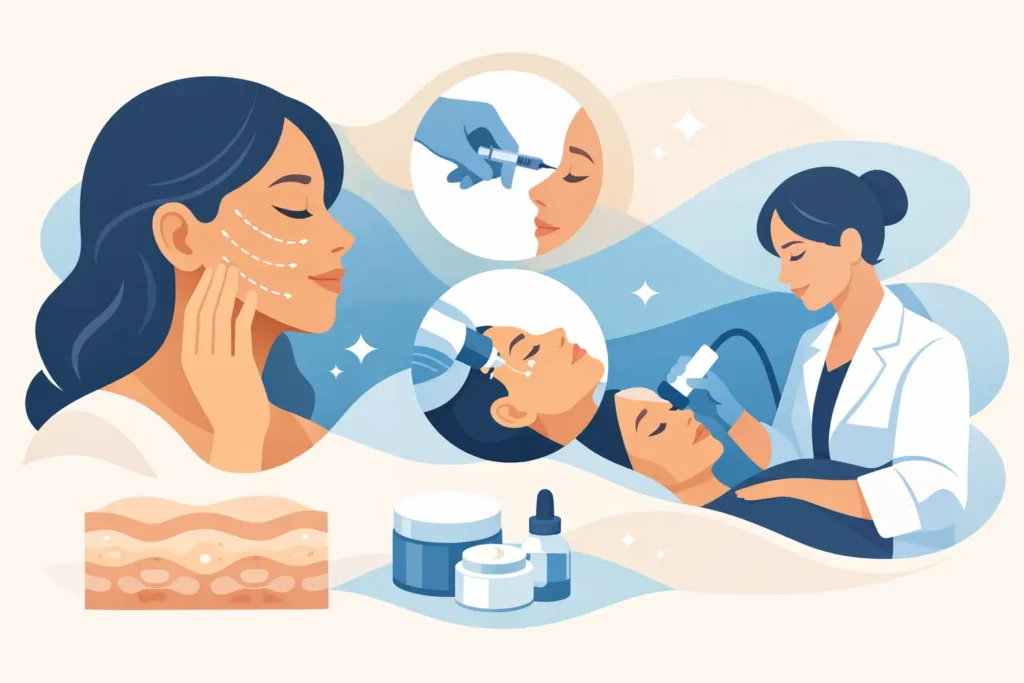
If your skin feels dull, uneven, scarred, or suddenly less firm than it used to, the question usually is not whether to treat it – it is which treatment will actually make sense for your skin. When clients ask about microneedling vs chemical peel, they are usually trying to solve a very specific problem: acne scars that will not fade, sun damage that makeup cannot fully cover, fine lines that seem to appear overnight, or texture changes that make skin look tired even when you are not.
Both treatments can improve the skin beautifully, but they work in different ways and they are not interchangeable. The right choice depends on your skin goals, your tolerance for downtime, your skin tone, your event schedule, and how aggressive you want to be.
Microneedling vs chemical peel: the core difference
Microneedling creates controlled micro-injuries in the skin using very fine needles. That process stimulates your body’s natural healing response and encourages collagen and elastin production. In simple terms, it helps your skin rebuild itself from within.
A chemical peel works from the surface downward. It uses a carefully selected acid solution to exfoliate damaged outer layers of skin and speed up cell turnover. Depending on the formula and depth, a peel can target dullness, discoloration, acne, and early signs of aging.
So if you want the shortest possible comparison, microneedling is more about collagen remodeling and structural improvement, while chemical peels are more about resurfacing and correcting visible surface damage. That difference matters when you are deciding what will give you the most noticeable return for your time and budget.
When microneedling tends to be the better choice
Microneedling is often an excellent fit if your biggest concerns are acne scarring, enlarged pores, fine lines, and mild skin laxity. It is especially appealing for clients who want gradual, natural-looking improvement rather than a more obvious peeling phase.
Because microneedling stimulates collagen, it is often chosen for skin that needs support, not just exfoliation. If your skin looks crepey, feels thinner than it used to, or has textural irregularities that seem deeper than surface discoloration, microneedling may be the more strategic option.
It can also be a strong choice for patients who want to improve skin quality over time. The glow after one session can be lovely, but the real value usually shows up after a series of treatments. Skin often becomes smoother, firmer, and more refined as collagen production builds.
For many clients, one of the biggest advantages is that microneedling can address acne scars and early aging at the same time. That combination is hard to ignore if you are trying to simplify your treatment plan.
Best concerns for microneedling
Microneedling is commonly recommended for acne scarring, fine lines, enlarged pores, mild laxity, rough texture, and overall skin rejuvenation. It may also be paired with growth factor-based support or physician-guided add-ons when a more advanced collagen response is the goal.
Downtime after microneedling
Most people look pink or moderately red for a day or two, similar to a sunburn. Skin may feel tight, warm, and a little rough as it heals. Downtime is usually manageable, but that does not mean it is no-downtime. You will still need to follow post-care closely, especially around sun exposure and active skincare ingredients.
When a chemical peel tends to be the better choice
A chemical peel is often ideal when the main issue is on the surface – uneven tone, sun damage, melasma, acne breakouts, post-inflammatory pigmentation, and dullness. If your skin looks blotchy, tired, or congested, a peel may produce faster visible improvement than microneedling.
Peels come in a range of strengths, which is part of what makes them so useful. A lighter peel may freshen the complexion with minimal flaking, while a medium-depth peel can create more dramatic improvement in discoloration, rough texture, and fine lines.
Clients also love chemical peels because they can be customized. Not every peel is designed to make you visibly shed layers of skin. Some are formulated for acne control, some for brightening, and some for anti-aging support. A well-chosen peel can do a lot without over-treating the skin.
Best concerns for chemical peels
Chemical peels are commonly used for hyperpigmentation, sun damage, melasma, active acne, superficial acne marks, rough texture, and dull skin tone. If your skin concern is more about color than contour, a peel may be the more direct route.
Downtime after a chemical peel
Downtime varies widely. Some peels cause only mild dryness or tightness, while others create visible peeling for several days. That is why consultation matters. The best peel for your skin is not always the strongest one. It is the one that matches your skin type, concern, and lifestyle.
Which treatment is better for acne scars?
This is where microneedling often pulls ahead. Acne scars, especially atrophic or indented scars, usually require collagen stimulation. Since chemical peels work primarily through exfoliation, they can help with post-acne discoloration but often do less for deeper textural scarring.
That said, not all acne marks are true scars. If what bothers you most is leftover redness or brown spots after breakouts, a chemical peel may be very effective. If the skin has depressions or uneven texture, microneedling is usually the stronger option.
For some clients, the best plan is not choosing one forever. It is using each treatment at the right time for the right reason.
Which treatment is better for pigmentation and sun damage?
For many cases of pigmentation, chemical peels are the more obvious front-runner. They are designed to accelerate exfoliation and improve tone irregularities. Sun damage, dullness, and superficial discoloration often respond well when the correct peel is selected.
Microneedling can sometimes help overall skin quality and mild discoloration, but pigmentation is a category where precision matters. In certain skin types or pigment conditions, the wrong treatment approach can make discoloration more stubborn. This is one reason physician-guided protocols matter so much, especially for melasma-prone or reactive skin.
Microneedling vs chemical peel for sensitive or darker skin tones
This is not a category for guesswork. Skin tone, sensitivity, and history of pigmentation all influence treatment safety.
Microneedling can be a very good option for deeper skin tones when performed appropriately, because it does not rely on heat or aggressive surface exfoliation in the same way some other treatments do. Chemical peels can also be safe and effective for darker skin tones, but peel selection and strength need to be chosen carefully to reduce the risk of post-inflammatory hyperpigmentation.
If your skin tends to react easily, more treatment is not always better. A personalized plan is usually safer and more effective than chasing the fastest result.
Can you combine microneedling and chemical peels?
Yes, but not typically at the same appointment unless a provider has a very specific protocol in mind. More often, these treatments are alternated within a broader skin renewal plan.
That approach makes sense because they solve different problems. A chemical peel may help clear congestion and brighten tone, while microneedling works on collagen support, scars, and texture. Used strategically, they can complement each other instead of competing.
This is often where a customized treatment plan becomes more valuable than a one-time service menu decision. At Natural Rejuvenation Med Spa, that consultation-led approach is central because skin goals are rarely one-dimensional.
What should you choose?
If your top priority is firmer, smoother skin with improvement in acne scars or fine lines, microneedling may be the better fit. If your main goal is brighter skin, clearer tone, fewer breakouts, or improvement in sun damage, a chemical peel may make more sense.
If you are preparing for a wedding, photos, a reunion, or another visible milestone, timing also matters. Some clients want a treatment with minimal disruption. Others are willing to plan around peeling or recovery if the payoff is worth it. There is no one right answer – only the right answer for your skin, your schedule, and your comfort level.
The most successful aesthetic treatments do not try to change your face into someone else’s. They improve what is already there in a way that looks healthy, natural, and believable. If you are weighing microneedling vs chemical peel, the smartest next step is not guessing which one sounds better. It is choosing a provider who will look at your skin closely, explain the trade-offs honestly, and build a plan that respects both your goals and your skin’s biology.