A softer jawline tends to show up in photos before you notice it in the mirror. One day your profile looks crisp, and the next, the lower face seems a little heavier, a little looser, or less defined than it used to be. If you are wondering how to tighten sagging jawline concerns without looking overdone, the good news is that there are effective options – but the right plan depends on why your jawline is changing in the first place.
Why the jawline starts to sag
The jawline does not lose definition for one single reason. In most adults, it is a mix of collagen loss, skin laxity, shifting fat pads, muscle activity, and bone changes that happen gradually over time. Genetics matter too. Some people are more prone to early jowling or laxity even if they take excellent care of their skin.
Lifestyle can speed the process up. Sun exposure breaks down collagen. Weight fluctuations can stretch skin and change facial volume. Posture, sleep, stress, and smoking also play a role in how quickly the lower face starts to look less firm. Hormonal changes, especially in midlife, can make skin thinner and less resilient.
That is why any honest answer to how to tighten sagging jawline concerns has to start with assessment, not guesswork. Loose skin needs a different approach than fullness under the chin. Mild laxity responds differently than more advanced jowling.
How to tighten sagging jawline at home
At-home strategies can help, especially in the early stages. They will not create the same lift as an in-office procedure, but they can improve skin quality and support longer-lasting results.
Daily sunscreen is one of the most effective places to start. UV damage is a major driver of collagen breakdown, and the jawline is often more exposed than people realize. A broad-spectrum SPF used consistently helps protect the collagen you still have.
Medical-grade skincare can also make a visible difference over time. Retinoids support cell turnover and collagen production. Peptides and growth-factor-based formulas may help improve firmness. Antioxidants such as vitamin C can support skin defense and brighten overall tone, which often makes the lower face look healthier and tighter.
Hydration matters, but not in the oversimplified way social media presents it. Drinking water is good for overall wellness, yet it will not lift sagging tissue. Topical hydration can temporarily improve the appearance of crepey or tired-looking skin, though, which helps the jawline look smoother.
Facial exercises get a lot of attention, and this is where expectations need to stay realistic. Gentle movement and muscle awareness may improve circulation and tone slightly, but they do not reliably tighten lax skin. In some cases, repeated overuse of certain facial muscles can even deepen lines elsewhere. If your concern is true skin laxity or jowling, exercise alone is usually not enough.
When skincare is not enough
If you are seeing shadowing along the jaw, early jowls, or loose skin that does not improve with skincare, it may be time to consider non-surgical treatment. This is often the point where patients feel frustrated because they are doing all the right things, yet their profile still looks tired or heavier than they feel.
The key is choosing a treatment that matches the cause. For some patients, collagen stimulation is the answer. For others, the issue is deeper structural support or excess fat under the chin. A personalized consultation matters because the same lower-face concern can look similar on the surface while needing a very different plan.
Best non-surgical options for a firmer jawline
Ultrasound skin tightening
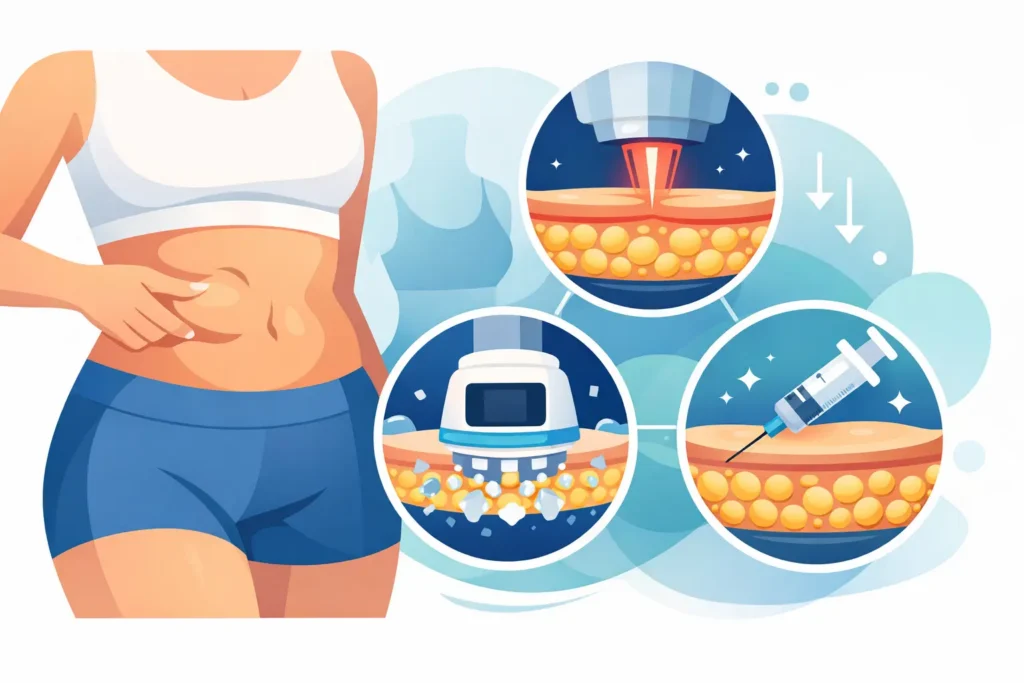
Ultrasound-based lifting treatments, such as Ultherapy, are designed to stimulate collagen at deeper levels of the skin. This makes them a strong option for patients with mild to moderate skin laxity who want gradual, natural-looking improvement. The treatment works by delivering focused energy below the surface to trigger a lifting response over time.
This approach is especially appealing to patients who are not ready for surgery and want physician-guided protocols with little to no downtime. Results are not instant. Most people see improvement build over two to three months as collagen remodeling continues. That slower timeline can actually be a benefit if you want subtle change rather than a sudden shift in your appearance.
Radiofrequency and collagen-stimulating treatments
Other skin-tightening treatments use heat energy to stimulate collagen and improve firmness. Depending on the device and the degree of laxity, these treatments can help refine the jawline and tighten the lower face. They may be recommended alone or paired with microneedling for additional texture and skin-quality benefits.
This category works best when the skin still has enough elasticity to respond. If laxity is significant, results may be limited. That does not mean treatment is pointless – it means honest expectations are important.
Microneedling for support, not lift
Microneedling can improve texture, fine lines, and mild skin laxity by encouraging collagen production. It is often a strong supporting treatment, especially for patients who want better skin quality along the lower face and neck. On its own, though, it is usually not the best answer for pronounced sagging jawline concerns.
Think of microneedling as part of a bigger plan rather than a standalone lifting treatment when jawline definition is the main goal.
Injectable treatments when structure is the issue
Sometimes the jawline looks saggy not just because skin is loose, but because facial support has changed. Strategic injectable treatment may help restore definition, soften jowls, or improve balance between the cheeks, chin, and jawline. In some patients, wrinkle-relaxing treatment can also reduce downward pull from certain muscles in the lower face or neck.
This is one of the biggest reasons consultation-led care matters. A natural-looking result depends on restraint, facial balance, and respect for your existing features. More product is not always better.
Treating fullness under the chin
A jawline can look less defined because of skin laxity, but it can also look blurred because of submental fullness. If there is extra fat under the chin, skin tightening alone may not create the result you want. In those cases, fat-reduction or contouring treatments may be part of the plan.
For many women, the best result comes from combination treatment. Tightening the skin while also addressing fullness or structural support often creates a cleaner, more elegant profile than relying on one treatment alone.
How long does it take to see improvement?
This depends on the treatment and the starting point. Skincare typically requires at least eight to twelve weeks to show meaningful change. Collagen-stimulating procedures often improve gradually over several months. Injectable contouring can show earlier visible change, although final settling still takes time.
Age, skin quality, hormone status, and lifestyle habits all affect your timeline. So does consistency. Patients who protect their skin from sun damage, follow a personalized skincare plan, and stay on schedule with maintenance usually hold onto results longer.
What to ask before choosing a treatment
If you are researching how to tighten sagging jawline concerns, ask whether the provider is evaluating skin, fat, and structure separately. Ask what kind of result is realistic for your degree of laxity. Ask whether the plan is designed to look natural in motion, not just in a before-and-after photo.
You also want clarity around downtime, cost, number of sessions, and maintenance. Some treatments are excellent but subtle. Others create more visible contour but require layering over time. Neither approach is wrong. It depends on your goals, your timeline, and how much change you want.
At Natural Rejuvenation Med Spa, this is where personalized planning becomes so valuable. A physician-guided approach helps match the treatment to your anatomy and comfort level instead of pushing a one-size-fits-all solution.
The most natural approach is usually a layered one
The best jawline results rarely come from chasing a single miracle treatment. They come from understanding what changed, then treating those changes thoughtfully. For one patient, that might mean ultrasound lifting and medical-grade skincare. For another, it may mean combining skin tightening with collagen support, contouring, or injectables for balance.
Natural-looking rejuvenation is not about making your face look different. It is about restoring definition where it has softened and helping you look more like yourself again. If your jawline no longer reflects how vibrant and confident you feel, a customized non-surgical plan can move things in the right direction – with results that still look like you.